
The Sideshow
Just for fun, it's The Sideshow
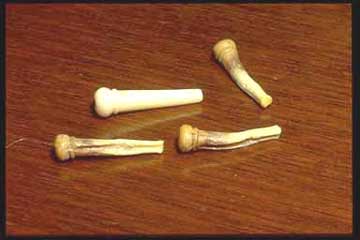
Step right up! See the shrunken bridge pins!
These old teeth were pulled from a 1947 Martin 00-17. The white one is a new pin, for contrast. Seems that the plastic used through the 1940s on lots of instrument gears and bridge pins was especially volatile stuff. . .
Serves as a good reminder to chuck those old bridge pins when they get chewed up. New pins are likely to give you much better mounting for the string balls.
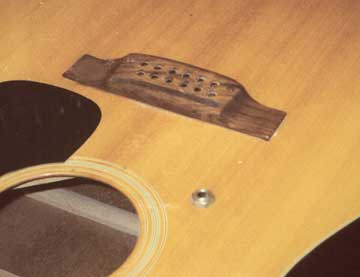
The worst location for a pickup jack:
Picture provided by Tom Smith, head of repairs at MARS Music, Nashville
Well, Tom, this one will be hard to beat!
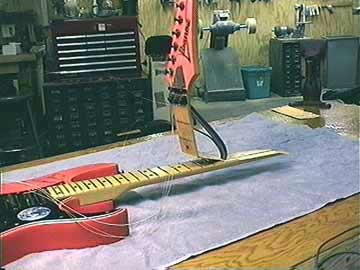
Here's a broken neck:
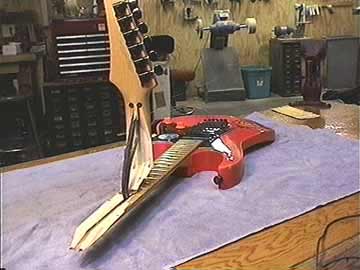
A big amplifier stack fell right on this baby while it was sitting on stage in its stand. Fortunately no people were hurt!
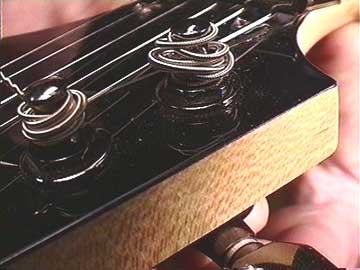
String Winding Blues
My guitar just doesn't seem to stay in tune since I put on these new strings:
Maybe if I had a few more turns around the post, that would help. . .
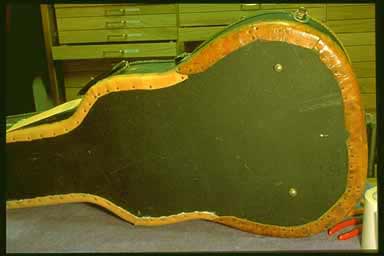
Case Repair Deluxe
This looks like an interesting case repair. Nice leather binding around all the edges:
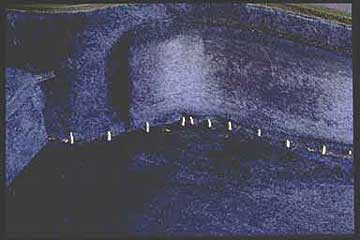
You ain't gonna believe the inside of this case! And, to quote Dave Berry, "I swear I'm not making this up."
Just look at the inside of the case:
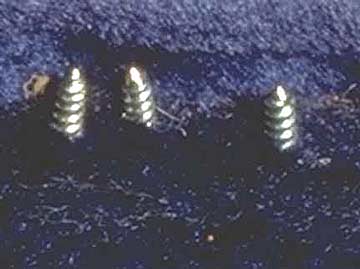
Yeah, let's have a close-up:
They're sheet metal screws and they go all around the inside of both top and bottom of the case.
Yet the guitar survives being carried in this medieval torture device!
The most amazing part is that the screws just miss the body of the guitar, which is held away by the generous padding of the sides. Scary as it looks inside, this case repair actually works!
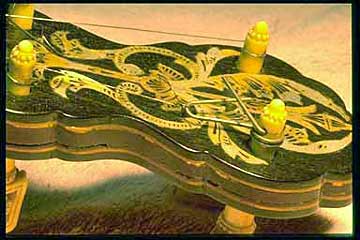
Banjo String Extender
Every so often you break a string and don't have a spare. The owner of this banjo, a circa 1900 Fairbanks Electric #5, came up with a simple answer. Just tie it. Well, not having enough string, he simply tied it to a paper clip and wound the clip right up onto the tuning peg:
The ingenuity isn't so amazing, really. I'm more surprised that the bone peg was able to stand the strain of winding and tuning. What a way to treat an elegant banjo in the $5,000 class!
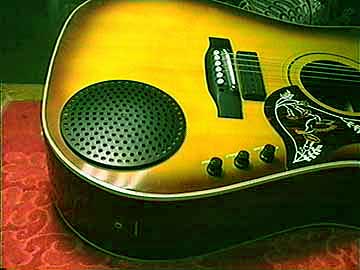
Remember this bright idea?
It's the nearly amazing EL FOLK guitar from the late 70s
When the sales rep came to our shop to demo this item, we became hysterical. He almost dropped his choppers when we actually ordered one.
EL FOLK (electric, folk) guitar combines the disadvantages of the worlds cheapest acoustic and the worst electronics all in one delightful package.
You should hear this thing wheeze!
A fitting item for the Gryphon Sideshow, I think.
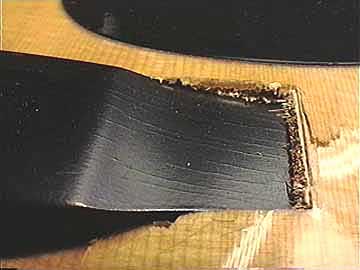
Beware Falling Drunks!
Here's what happened when an unstable fellow stumbled and fell on the face of a guitar. He broke his fall and the guitar when his outstretched hand hit the bridge and drove it clean through the top:
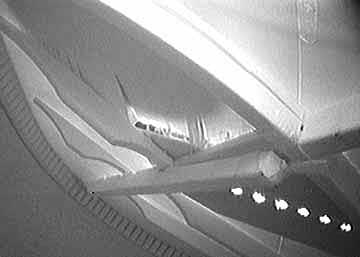
Yow! Look at the inside:
Everything that could break was broke!
Notice that this is a laminated top, which broke all around the bridge. If it had been a solid top, chances are the damage would have been severe, but probably much more easily repaired because the breaks would not have gone across the grain. I recommended not to fix this one, by the way.
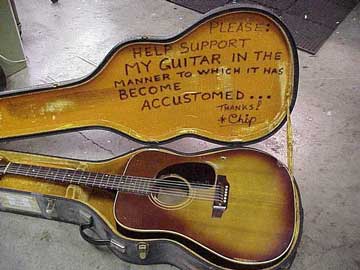
Makes sense to me. . .
This one is a bit to reasonable to be part of the sideshow, but then, what the heck, I had to put it somewhere. Here's a fellow who plays on the street with a customized case that tells its own story!
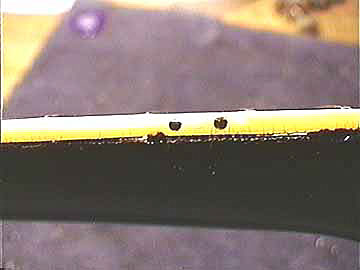
"Fixing" a Loose Fingerboard:
Here's a black Gibson Les Paul with a very loose fingerboard:
The guitar is so black and the binding so white, I had a bit of trouble with the contrast in the photo, but you can see how loose the board is.
Now, most of us foolish traditional types would waste precious time regluing the loose fingerboard.
Here's how to get that old guitar back on the road right away:
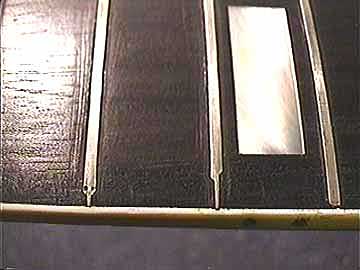
Just level the frets, and you're off and playing again:
Oops! Went right through the frets into the tang!
Oh, well, we'll just file the ebony down around the tang and the frets will still work. . .
Yikes, what's been living in my guitar?
ROACHES! EEEEUUUWW!!
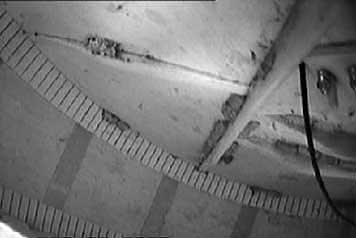
Here's a view with the black & white inspection camera:
Yep, this 1943 Martin 0-15 was home to a LOT of roaches who left their egg casings behind. The owner of the guitar was surprised when I looked inside and told him what I saw. Previous repairmen, including the fellow who installed the pickup either didn't notice, or at least didn't tell him about the previous tenants.
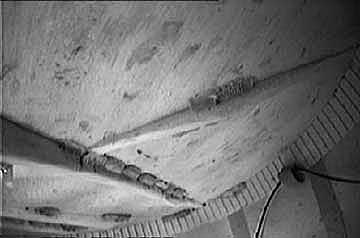
All around inside the top, along the braces there are these little (empty, I hope) egg casings:
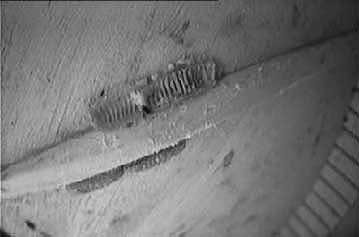
How about a nice close-up:
Yuck!
This instrument has been owned by a series of Hawaiian slack key guitarists, who live in the tropics where roaches do very well, thank you.
No real harm done here but there is a lot of staining from roach "you-know-what" and a bunch of crud to clean out where the egg casings attach. Fortunately, it appears that the roaches left town decades ago.
When the folks at Martin make a guitar, they glue the braces on the top but don't clean off every drop of glue because you can't see up in there. The roaches appear to have liked the hide glue, which, being gelatin, is food (yum.)
Low Cost Housing
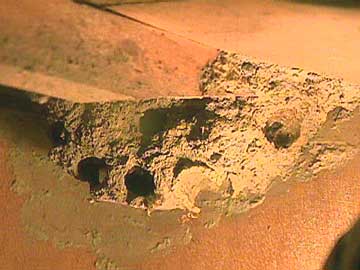
Here are two photos of an insect construction project:
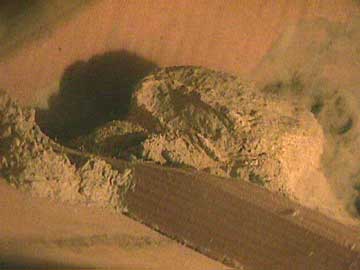
Mud dauber wasps have started building nests in this guitar. Their building plans were not approved by the Acoustic Guitar Architectural Review Board, so the dwellings were "red tagged" and subsequently demolished. . .
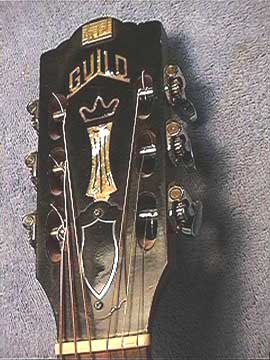
I'm Speechless
This is the most amazing tuning machine "upgrade" I've ever seen!
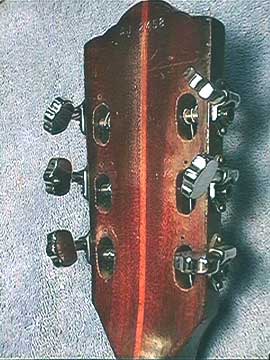
Oh, all right, here's the back of the peghead:
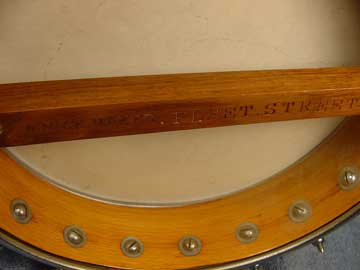
A "Nice" S/M Banjo?
Here's an antique banjo made by W. Nice, of Fleet Street, London:
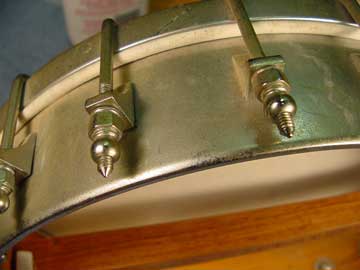
The brackets on open back banjos have a tendency to dig into the player's leg a bit, but Mr. Nice apparently figured banjo pickers were a hardy breed capable of enduring a bit of pain for the sake of their art:
These ends are original, and they make a surgical point of " a banjo on my knee."
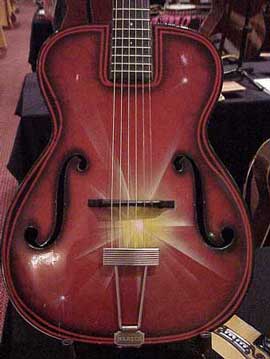
Refinished Martin Guitars
Quite a paint job, isn't it? This is a 1936 Martin R-17 archtop guitar, which was clearly in fine structural shape when it was customized:
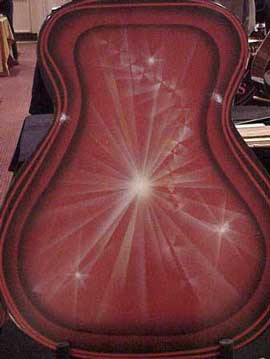
You don't see work like this very often these days:
This instrument was a visitor to the A.S.I.A. Symposium in Nashville on March 23, 2000.
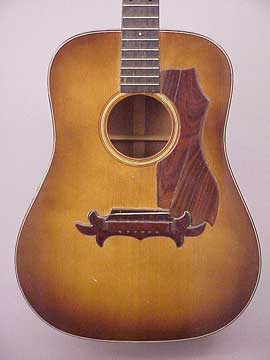
What a coincidence. Here's another 1936 Martin guitar. It's a D-18, given the full "mariachi treatment" in the early 1960s, including conversion to nylon strings:
Fortunately, this one has recently passed into the hands of a competent luthier who intends to bring it back to its original utility, and a semblance of its original appearance!